What Is Home English?
How Preschoolers and Elementary School Children Can Learn English at Home
Home English differs from traditional approaches such as English conversation schools and cram schools. It creates opportunities to encounter English in everyday life so children can absorb it naturally.
Bring English audio, picture books, videos, and learning materials into everyday life.
Build a routine that feels manageable for both children and parents.
Go beyond play and listening by gradually connecting English to print and reading comprehension.
What Is Home English?
Home English is a term that spread organically, and it does not have a single official or academic definition. In general, it refers to creating an English-rich environment at home—without relying only on conversation schools or cram schools—so children can listen to, read, and use English in daily life.
Every family does it differently: playing English audio at home, reading English picture books, watching English songs and videos, using English apps or online materials, or speaking to children in English. Home English is a broad concept that includes all kinds of home-based English environment building.
A common feature among families who succeed with Home English is that they create an English-rich home environment and expose their children to English audio on a daily basis. By getting used to the sounds of English before they develop resistance to it, children can build a foundation for listening and pronunciation.
Home English can include many different approaches, such as audio exposure, picture books, phonics, online English conversation, and English grammar. The key is knowing what each one is for and at what stage to use it.
The Basics of Home English
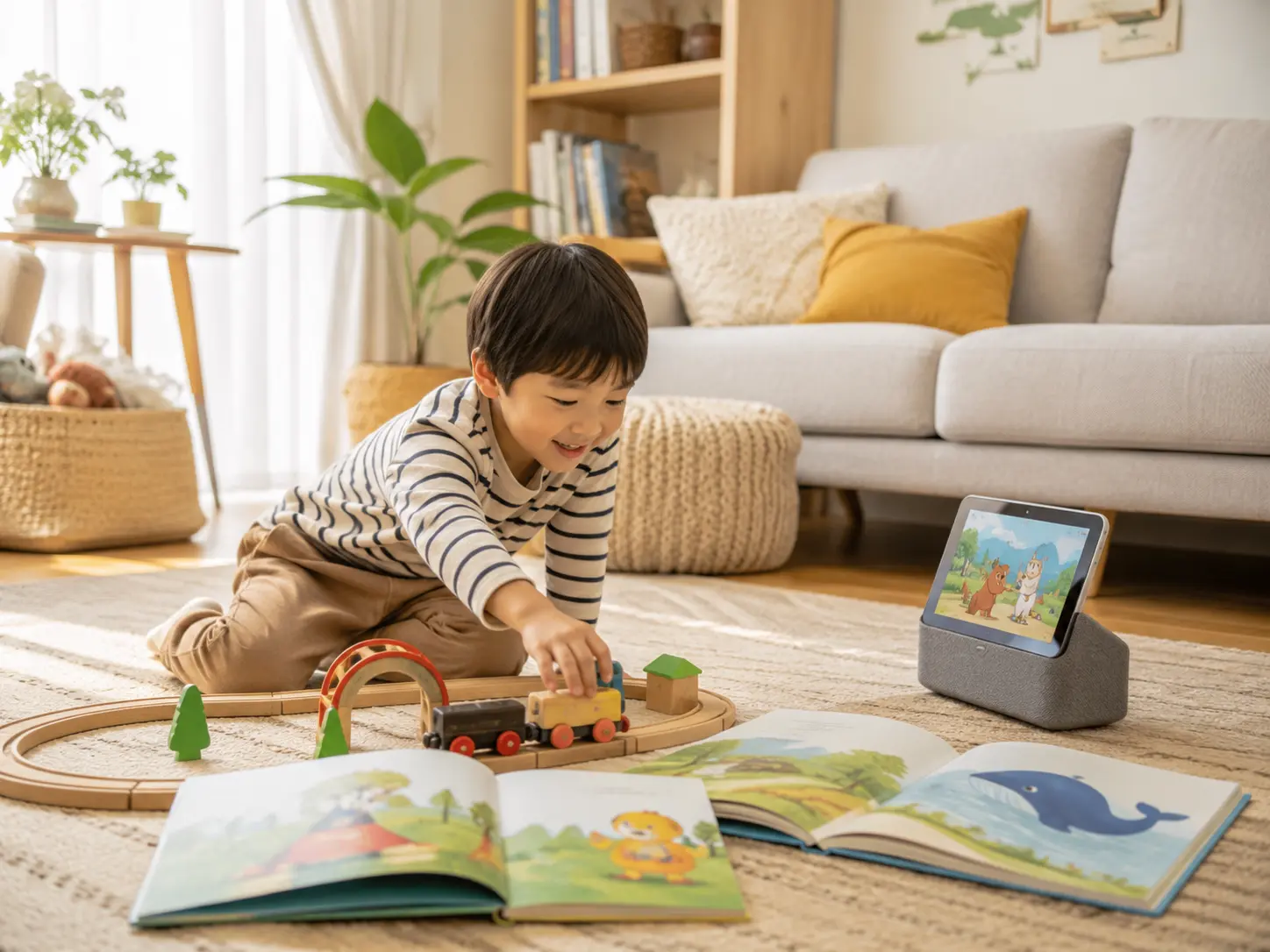
The focus is less on teaching English and more on creating a home environment where children can keep engaging with English.
What Matters Most in Home English
What matters in Home English is fitting it naturally into family life and maintaining rich English audio exposure over the long term. There are many ways to do it—videos, picture books, online materials, and more—but you need to understand the amount and quality of audio exposure and connect what children hear to meaning, print, and reading comprehension.
Ideally, it should feel natural for both parent and child, continue over a long period, and fit smoothly into daily life. It is also important to secure a stable amount of time for English audio exposure. If that time is too limited, children cannot fully learn the rhythm and sound patterns of English.
Sustainable
Let children encounter English naturally in daily life, without forcing concentration or memorization.
Low burden on parents
A steady routine works best—one that does not depend on parents constantly teaching English or searching for new materials.
Keep enough exposure going
Even if it is little by little, make sure there is stable daily time for English audio exposure.
You Can Do Home English Even If You Don't Speak English
When people hear “Home English,” many worry that they cannot do it unless a parent speaks English.
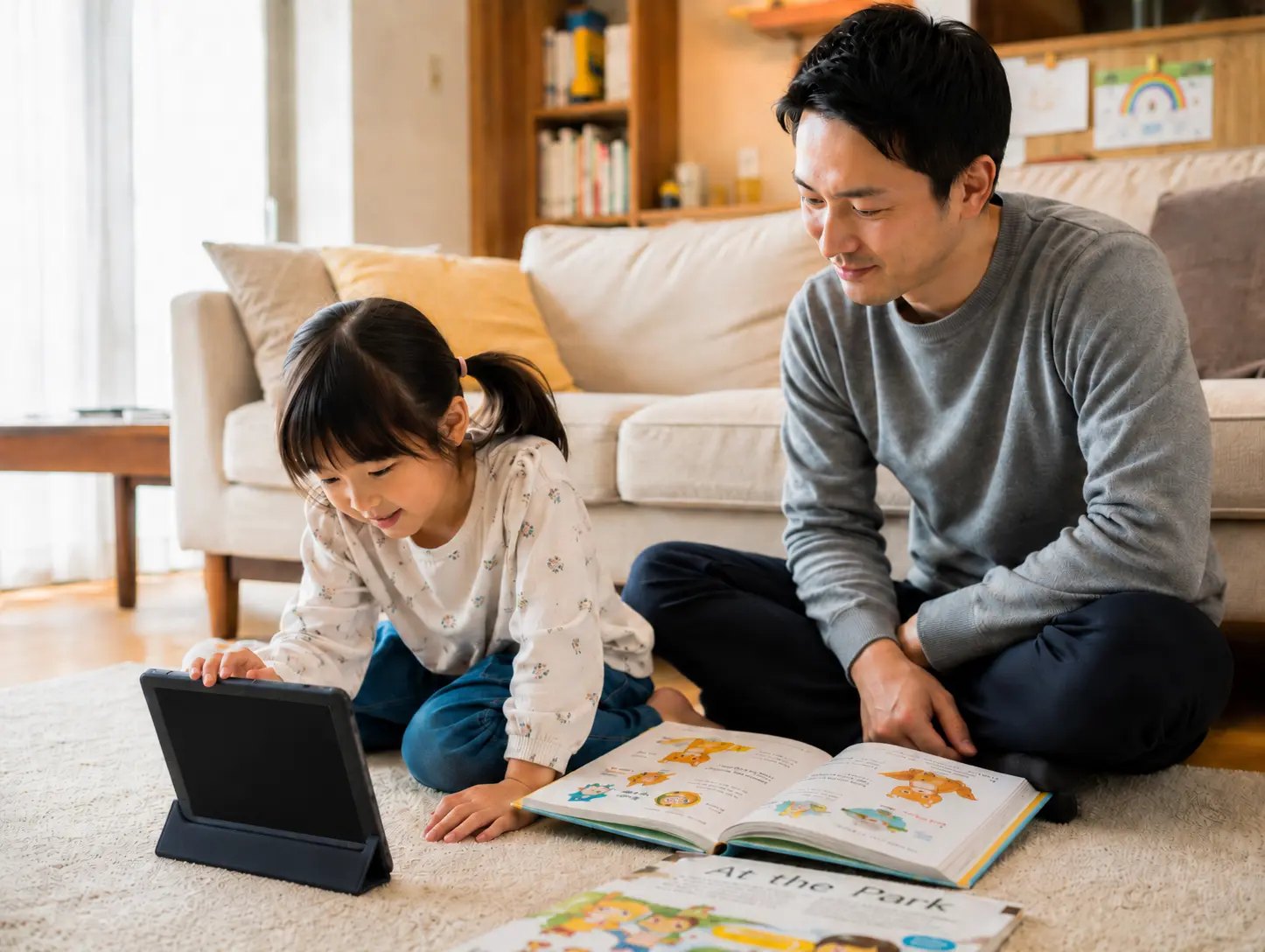
In Home English, parents do not need to teach English. What matters is creating an environment where children can hear English every day.
If parents can speak to their child in English, that can certainly be part of it. However, when the approach depends on a parent’s English ability, it often becomes hard to sustain over time as family schedules and energy levels change. Instead, Home English can begin simply by playing English audio, providing materials or picture books when needed, and building English time into everyday life. For example, audio-supported picture books let the audio source handle the English pronunciation.
What matters is that parents do not overextend themselves, children do not feel pressured, and the routine can continue naturally every day.
How to Turn Home English into Real Ability
Home English is easy to start, but if the amount of English exposure is too small or inconsistent, it will not grow into real ability.
The first reason is that acquiring English requires a large amount of audio input. If children do not spend enough time with English audio, they cannot learn its sound patterns and rhythm.
The second reason is inconsistency. If you simply choose videos or apps on the spot each day, you cannot tell how much of the English children actually need for learning they are hearing.
Beyond just getting used to English, you can also guide development step by step—from sound to meaning, meaning to print, and print to reading comprehension.
Recommended Home English Activities by Age and Stage
With Home English, what matters is not choosing materials simply because a child is a certain age, but choosing approaches that match the child’s stage of English development. Just as with Japanese, children first develop the ability to understand what they hear, then build the ability to understand what they read on top of that foundation, and eventually gain English they can truly use.
Build an English ear
Recommended ages: 0–early elementaryThe first priority is creating an environment where children hear lots of English. Daily audio exposure helps them get used to English sounds, rhythm, and intonation, building the “English ear (speech perception)” needed to understand English directly in English.
→ Home English and Audio ExposureBuild reading comprehension
Recommended ages: 2–middle elementaryOnce children can understand English by listening, connect letters and sounds through phonics, rhyming, sight words, and picture books. Over time, this develops into the ability to understand English through reading.
→ Home English and Picture Books → Home English and PhonicsTry Eiken
Recommended ages: early elementary and upOnce reading comprehension starts to develop, use Eiken to objectively check how far your child’s English ability has progressed. It can serve as a benchmark for the listening, reading, and vocabulary skills your child has built.
Different Roles of Home English and English Conversation
In English conversation lessons, children can gain experiences that are hard to get any other way, such as turn-taking and immediate responses. On the other hand, if they can barely understand spoken English yet, conversation practice often turns into self-introductions and memorized phrases, so it is not an efficient way to create large amounts of audio input.
It is more efficient to first give children plenty of English audio exposure through Home English and wait until they can understand at least some of what another person says. Then online English conversation can serve as a place to use English.
understand it
using English in interaction
How to Choose Home English Materials
Home English activities should be chosen not only by age, but also by a child’s English level and goals. Even among children of the same age, the next step will differ depending on whether they are almost complete beginners, can understand when they listen, or can already read simple English sentences.
Choose materials and activities based on age, previous English experience, current learning stage, and goals.
Frequently Asked Questions
What is Home English?
Home English means creating an environment at home where children can encounter English and listen to, read, and use it regularly. It can include many approaches, such as English audio exposure, English picture books, English videos, English apps, online materials, and parents speaking to their children in English.
What age is best to start Home English?
Creating an English audio environment is easiest to continue when it starts in early childhood. In particular, from infancy through the early elementary years, it is easier to weave English into daily life. Even after that, however, families can still begin successfully if they choose an approach that fits the child’s stage.
Can we do Home English even if the parents do not speak English?
Yes. In Home English, what matters is not that parents teach English, but that they create an environment where children can hear English audio regularly. Parents do not need to teach pronunciation or speak to their children in English.
Does simply watching YouTube count as Home English?
In the broad sense, watching English videos can also be part of Home English. For a closer look at the difference between videos and audio exposure, as well as how to think about input time and the amount and quality of audio sources, see “Home English and Audio Exposure”.
Which is better, Home English or English conversation?
You do not need to choose only one. Once children get enough English audio exposure at home and build a foundation for understanding what they hear, English conversation can become a place where they actively use English. For more on timing and roles, see “Home English and English Conversation”.
Can Home English lead to Eiken?
Yes. When children get enough English audio exposure and build a foundation for understanding English directly in English, it becomes much easier to develop reading comprehension and prepare for Eiken. At the same time, it is important to move beyond simple familiarity with English, connect it step by step to print and reading, and add test-format preparation appropriate to the target level before the exam.